Friday, January 9, 2009

According to the New York Times, the nation lost 524,000 jobs in December, capping off a year in which 2.6 million workers were put on the street, for a current unemployment rate of 7.2%. Conversely, that means a 92.7% employment rate, right? Not too bad...

Not really. I think we would all be surprised at the true employment rate (does anyone know where to find this statistic?). The iceberg of unemployment should calculate those who have not filed for benefits, those who are not eligible for benefits, those whose benefits have expired, and those who have given up on the whole thing and are trying to earn piecemeal in the shadow cash economy.

This all makes me begin to feel as though I am part of an organism which is metastasizing while the medical team is looking for a silver bullet. 

I'm not sure that those who are still on the job feel any different. They see their employers in the process of selling themselves, snapping up deals, or filing for bankruptcy, and those rumors are deadly for production and efficiency. 

So how do we get beyond the negativity and find our way back into the 92.8%?

First, get back to basics. Here is my favorite: there are only two jobs in any company: you are either in Sales, or you support Sales. Decide in which half your talent lies, and create the right angle for your story.

Second, follow a Sales process in building your plan. Here are the components of the Sales process:

Pre-approach: research and target who you want to sell to, and just as importantly, who is in a position to buy.
Approach: Use available contact methodologies to reach the buyer: mail, email, telephone, headhunter, social networking, physical networking to get the interview.
Fact/feeling finding: this starts by leveraging the information uncovered in the pre-approach, and building on that with specifics from a job description. If there is no specific job description (which should include a summary, essential job functions, marginal job functions, required qualifications, required skills and competencies, preferred skills, equipment used, training available, and specific location), be wary- that employer hasn't thought it through. Note that "feeling" is just as critical as "fact". The company feelings will become particularly apparent in a behavior-based interview process, and you can also find this out by communicating with current and past employees, if possible. Line up your features and benefits directly to their needs and feelings. Read between the lines during the interview, and be prepared with a series of probing questions of your own (which cannot be answered with a "yes" or a "no"). In fact, why not turn the tables and ask a few behavior-based questions of your own--"Tell me about a time when your market research played a critical part in a competitive assessment. How did you do your research? What did you discover? How did you use that information to better position your product/service? What was the impact on sales and revenue?" 
Close: You are the solution to the company's needs. Their investment in you will provide a return that exceeds their company ROI. How do you find out what the company ROI is? If the company is publicly traded, this is a matter of record. If the company is private, estimate based on your research of public companies in the same general business. How do you calculate your personal ROI? Take the total compensation from your previous job and divide into the revenue or value you claim on your resume: whether you were in Sales or supporting Sales, you must lay a claim to some specific contribution for the work you did. Know your number.
Ask for referred leads: If you land the job, become an inside referral source for your network; if you do not land, ask the prospective employer if he/she is aware of any other opportunities inside or outside the company. Ask them if they will become part of your network, possibly through a LinkedIn or Facebook connection. Note: referred leads bring you back full circle to pre-approach.

As I look at the market, the climate, and prospects, I plan take to heart the motto of General "Vinegar Joe" Stilwell, U.S Army: "Illegitimati non carborundum".

Tuesday, January 6, 2009

Yesterday the travelogue roadies packed up plastic storage boxes of Christmas and other holiday accoutrement for the next show (will it be here, in the same place?) and the venue returned to normal. One event during the take-down stands out, though---the last thing to go was the tree, which had been painstakenly selected by the roadie team in the space of five minutes at our favorite tree place, which, we were sadly informed, has played their last waltz and will sell out to the local military-industrial complex in 2009. It was really the home-made wine samples which attracted us to them in the first place, so we'll compromise and bring our own to a different chopper-lopper next year.

As the head roadie and me carried the tree to the curb, we were startled by a ceramic clunk-crash, as an overlooked ornament hit the concrete driveway. This was particularly disconcerting to me, as I had assumably combed the tree and completely removed the eclectic selection of balls, figurines, santas, reindeer, kitchen utensils, fish, angels, animals, boats, superheroes, barbie dolls, sports figures (Muhammed Ali and Joe Namath), and knick-knacks before trashing. 

The unfortunate victim was a Hummel, one of several kindly sent to us annually by our Miami aunt. As I picked up the pieces, I was struck by the implication: I had failed in my attention to detail in clearing the tree. I had not done it right the first time.

No excuses, I just rushed the process so I could get the job done faster. Had I been working for me, I (manager) would have been alerted to subsequently review each and every activity of me (employee) to prevent a future drop, not a very productive or empowering management technique. Although I do believe in the 80-20 rule, (if something is 80% ready to go, and you know the remaining 20% will not materially impact rollout and will be completed within a reasonable amount of time, then go ahead and roll out), it's only valid AS LONG AS YOU HAVE IDENTIFIED THE 20%! Last minute surprises require too much high maintenance and micro-management, and losing trust in associates is not good for the leader or the team. 

After careful review of the broken figurine, I realized I could save it with that essential gunk of households and golf bags (use it to seal split fingertips), superglue. It was a well-built solid piece of ceramic, not hollow. Hummel quality. So, I repaired it good as new, wrapped it in paper, and stored it away with its compadres. Had it been shattered in a thousand pieces, I would have rued it and chucked it. Lesson learned: some mistakes can be fixed, and they are easier to fix if they are built with a solid infrastructure, and you have the right expertise and glue to make it work.

So here are two more New Year's resolutions for me: sweat the details when I am responsible for them, and fix what I have broken. 

By the way, I went over the tree again as it sat on the curb. Nothing but branches and needles as I did a final check on my work before the trash truck came. Do it before it's too late.

Monday, December 29, 2008

Last night I watched the Cavs come from behind to beat a determined Miami Heat team. Aside from being a homer, I can't help but admire the team that Mike Brown coaches. With well-placed newbies like Mo Williams, Delonte West, and Ben Wallace, Brown has molded the top defense in the league, and taken the heat off LeBron James on the offensive end.  They are beautiful to watch on and off the court. 

And, they invoke the admirable traits of great organizations: consultative leadership, unselfish distribution of opportunities, highly skilled workers, and a focus that great defense leads to game-winning offense. 

Great leaders don't have to be great players. Mike Brown broke into the NBA as a videotape reviewer, and learned the game from within without once dribbling the ball on the clock. He delegates appropriate decisions to his leadership team,  and he applauds their successes, while taking the heat himself for all mistakes. He coaches, he doesn't "tyell".

The team itself plays like a superstar, although arguably the best player in the NBA is their leader, and could, if he wanted, focus on himself and his own personal goals. But he doesn't. That comes from the top, and James knows that his legacy will be defined by team success, not individual accomplishments. Know any sales teams out there that could improve under that formula? 

Interesting that the Cavs are owned by Dan Gilbert, founder and Chairman of Quicken Loans, a leader in direct to consumer home financing that did not go under or need a bailout to continue operating in this harsh environment. Consider that Dan himself conducts orientation for new employees, focusing on his "ISMs" for success. Here are some examples: "Obsessed with finding a better way"; "You'll see it when you believe it"; "Numbers and money follow, they do not lead"; "We eat our own dog food"...and many others. The leader sets the tone.

Probably the most underrated contributor to the Cavs is Ben Wallace. He can't shoot, can't dribble, you hold your breath whenever he gets the ball, and an opponent's best stop is the "whack-a-Ben" defense, which puts a 40% foul-shooter on the line. But the man can play defense, alter plays with tenacious top-of-the-key doubleteams, fall back to the paint, and flap one of those long wings to apply a facial to the best drivers in the league. He has very specific skills that will not fit into every organization, but his contribution is maximized by how he is used in the Cavs' defensive schemes. You need defensive players on your team, in the right places, to keep the competition honest.

Speaking of defense, how much business is walking out your back door while you bring it in the front? We all know that acquisition pays the big bucks, but it's important to keep the clients you have, and so retention and relationship expansion are probably more critical to year-over-year profitability than new business. The mantra for any business is twofold: more business from existing customers, and more customers. So, while you hire the best salespeople you can, don't neglect the best service and support players as well. They might not get paid as much as the rainmakers, but they embody the essence of the maxim that "sales is service, and service is sales".

Apply this to your job search. Pick your prospects, and research the leadership, offense, defense, how they play. Use LinkedIn to contact current and (especially) former employees. Consider the leadership. How do they respond under pressure? Who takes the credit for success, the bullet for failure? Do they do the right thing? Do they play as a team or as individuals, and do you fit into that infrastructure? Can you see yourself taking pride in their success? 

Go Cavs!

Wednesday, December 24, 2008

'Tis the season for sales, although it appears from media reports that sales are down...as determined by purely financial measures. But who needs reports, you can feel it in your bones. 

Here's the rub: Sales success is not about money, it's about emotions. Money is fiat, the means of exchange, irredeemable currency (I'd like fifty dollars worth of full faith in the Federal Reserve and the guarantee of the US government, please..oh, you mean it's only a promise?).

Again, sales is emotions. Specifically, three emotions: fear, love, and logic.

Fear: wouldn't it be terrible if...? Love: wouldn't it be great if...? Logic: isn't it smart to...?

These are the drivers of any purchase, whether it be an IPod (wouldn't it be terrible if all of Johnny's friends had one and he felt left out?), furniture (wouldn't it be great to have a matching living room suite?), a house (isn't it smart to build equity in a long-term investment?). Anything. 

Is it fair to assume that since "sales" are down, emotions are the drivers? That emotions are actually the fundamental essence of the economy? That what is missing in the current economic equation are the fear, love, and logic factors?

Well, let's keep it at the individual level for now.

As we look toward the New Year and the selling of ourselves, remember, in that interview, that the buyer will be motivated by one or all of these emotions, in varying degrees. Our job is to ensure that we invoke the emotional reactions we need to land the position: Wouldn't it be terrible if your business plan fell short because you needed the value I bring?...Wouldn't it be great if you rounded out your team with a proven contributor, and brought greater recognition to your department?...Isn't it smart lay the foundation for competitive growth with people who know how to drive revenue?

I know my own post-Christmas sale will focus on these concepts.

Merry Christmas and Happy New Year!


Friday, December 19, 2008

Well, today we will brave the crowds and do a little (a VERY little) Christmas shopping. From what I hear from friends and family, there is no shortage of parking this year. I'm reminded of shopping trips in the past, as kids, and the logic or thought ( or lack of ) that went into what went under the tree. 

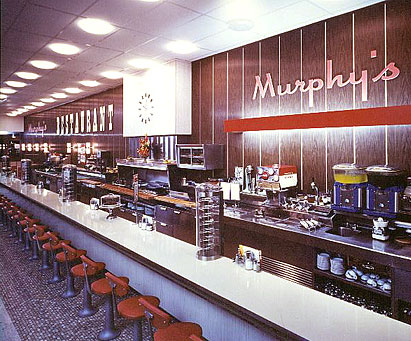
When we were single-digit aged, my mother would take my younger brothers and me to Murphy's to shop for my aunt and great-aunt. She let us pick out a small makeup bag and fill it with lipstick, hand cream, compacts, and other aunt-like stuff. She guided us away from anything outlandish (although I can't imagine what might be considered outlandish in the Murphy's cosmetics aisle) until we filled the bags and they were in her cart---then, and only then, were we allowed to LOOK (never to buy) at the toys. My brother Pat was the worst, he would take so long picking out his aunt-stuff, he was sooo slow, he was always behind schedule (he received an award in high school for papering his bedroom with late passes) and we always had to wait for him. Damn, all I wanted to do was check out those army men! Get a move on Pat!!

Mom would buy us a coke at the soda fountain if we were good. That was the big treat (we never had soda at home), it came in a regulation glass with chipped ice and a big straw. We would kneel on the stools and spin ourselves around, trying to cop a sip as we whirled past the glass. 

Anyway, we got the bags of stuff for our aunts, and the whole experience probably cost about ten bucks.


Saturday, December 13, 2008

My friend called me last week to co-commiserate on the economy, real estate values, and our general disgust at the malaise of integrity in the system. As usual, the conversation quickly blossomed into dark humor as we laughed in the face of disaster, including several satiric scenarios surrounding the anticipated appointment of the 'Car Czar' ("The business of government is to keep government out of business- that is, unless business needs government aid." Will Rogers)...and an interesting solution for the foreclosure crisis proposed in Barron's by Jonathan Laing (at least it covers those of us who continue to demonstrate financial integrity).

When the dialogue got serious, talk turned to the need to re-invent oneself in anticipation of where one is going, and how much time one will be in no-job travels...and that the essential first step is personal transformation before public transformation.

Consider: a person develops levels of skills, competencies, and value over a lifetime (whether it's 8 years or 80) that define their public persona, their worth to others, whether as friend, lover, employee, teammate, leader. We become overly comfortable in this presentation as we receive reinforcement that we fit in (or don't fit in, as the case may be), and often fail to recognize the same-old stagnation that may very well be apparent to others--and a detriment to ourselves. Often it takes a revelation, a cosmic charlie smack upside the head, for us to realize that change is due. Time is filled with extraordinary examples of phoenixing the new from the detritus of the old, some celebrated, some notorious: Paul, Augustine, Copernicus, Newton, Napoleon, Garibaldi, Marx, Hitler, Schweitzer, Wojtyla, Hussein...

Knowing that we are, for the most part, not extraordinary, nor are we likely to experience a cathartic bolt from beyond ala Alvin York, transformation remains a more subtle task for us. 

One way to re-engineer is the Renaissance way: strive to become a polymath "whose knowledge is not restricted to one subject area". Find a science to complement your art, or an art to fill out your science. Adopt eclecticism: appreciate Bach and Garcia, Picasso and Hopper, pierogies and oysters. Learn how to read a balance sheet. Write a marketing plan. Set a mindbending goal and go for it. 

My attempt is to be a business leader who cooks, writes, reads (my mindbender is to read all of the Pulitzer prize-winning novels), watches athletics (all kinds, even rodeo), and is equally comfortable at a rowdy black tie or a philosophical tailgate. 

Expand, insert your polymathy in a subtle way at your next interview, look for The Other One, ROUNDING is a good way to put it, and remember, the faster we go the rounder we get.  

Thursday, December 11, 2008

This has been a productive holiday week, but a non-productive no-job week. Cookies are baked, ready for mailing, we'll get the tree up tomorrow, and the house will be Christmas ready by Sunday night. This is particularly important because we are entertaining my wife's associates at our house on Monday evening. She felt it was a more reasonable approach to the traditional office party, and I agree, having done this myself for my own teams in the past. It's just more homey and warm, compared to say, Dave and Busters. Of course, I'll be doing the cooking, assisted by an able-bodied sous-chef, my oldest son. Brisket will be the main course: at least one day before serving, place the raw brisket in a large pot, cover with water, add an onion, two large carrots, two stalks of celery, bay leaves, peppercorns, beef base or bouillion cubes, couple of dashes Worchestershire and steak sauce. Bring to a boil, and simmer for a few/three hours, or until meat becomes tender. Place the cooked brisket on a plate or sheet pan, and cool uncovered in the refrigerator for at least a day. Strain the broth, and discard the vegetables. Cover in a plastic container and cool along with the meat. Two hours before serving, trim the fat off the brisket, slice 1/4 inch pieces against the grain, and place in a large frying pan. Discard the hardened fat on the top of the broth, and cover the brisket with the broth. Simmer gently until heated through. To serve, spoon broth onto small crusty rolls, pile high with brisket, and always have horseradish and plenty of napkins on the side.

You can serve brisket with onion soup potatoes or latkes (with sour cream, of course). 

Now for drinks: how about this, from my bartending grandfather's bar-guide, How to Mix Drinks, or The Bon-Vivant's Companion, by Jerry Thomas, published 1862...

"Egg Nogg is a beverage of American origin, but it has a popularity that is cosmopolitan. At the South it is almost indispensible at Christmas time, and at the North it is a favorite of all seasons. In Scotland they call Egg Nogg "auld man's milk".

Baltimore Egg Nogg
(for a party of fifteen)

Take the yellow of sixteen eggs and twelve table-spoons of pulverized loaf-sugar, and beat them to the consistency of cream; to this add two-thirds of a nutmeg grated, and beat well together; then mix in half a pint of good brandy or Jamiaca rum, and two wine-glasses of Madeira wine. Have ready the whites of the eggs, beaten to a stiff froth, and beat them into the above-described mixture. When this is all done, stir in six pints of good rich milk. There is no heat used.
Egg Nogg made in this manner is digestible, and will not cause headache. It makes an excellent drink for debilitated persons, and a nourishing diet for consumptives.

Now that's my kind of medicine!! I suppose I'm just and auld man...